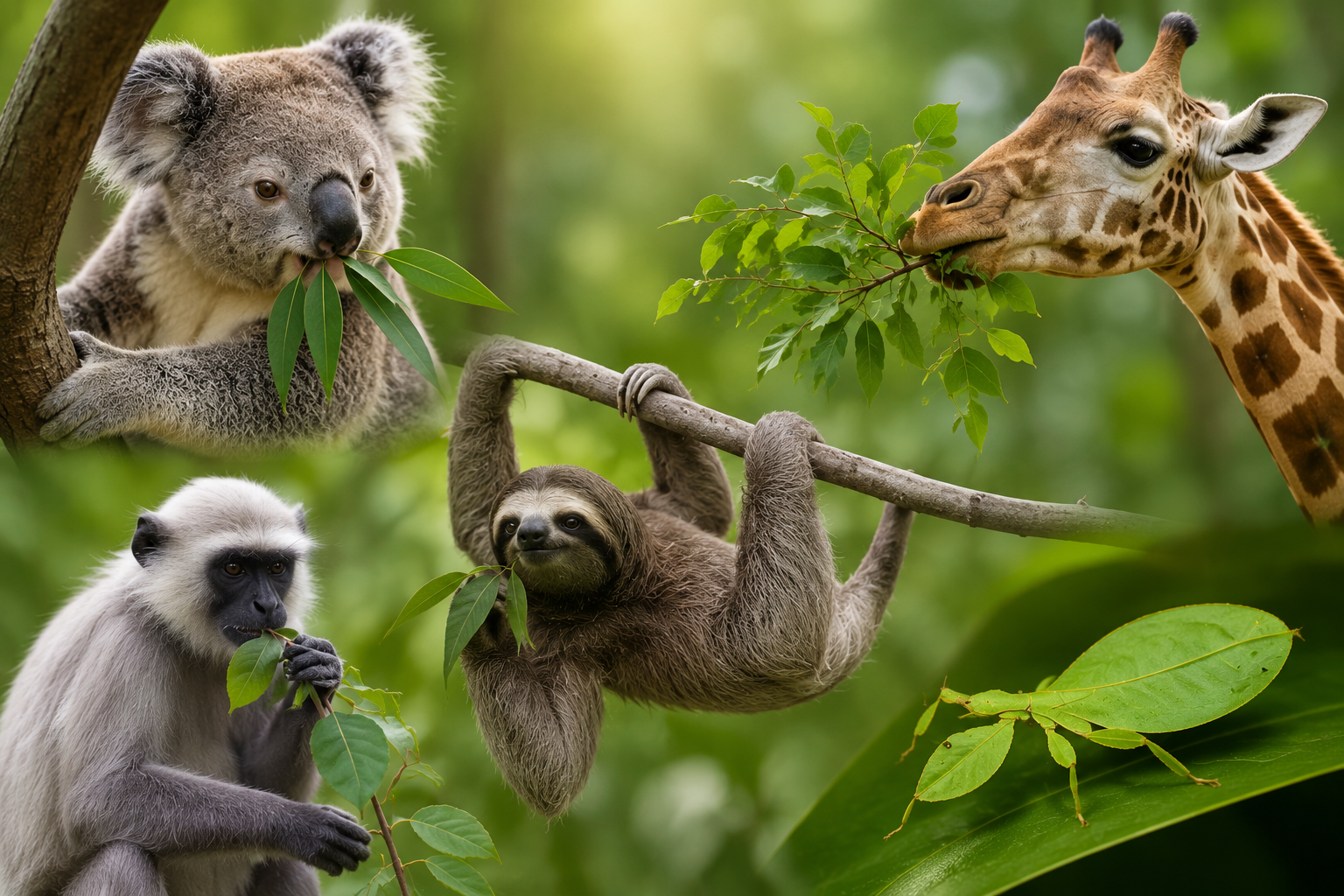
The giraffe is the tallest land animal on Earth, with males reaching up to 18 feet. Their long neck helps them access leaves that most animals can’t reach—giving them a major survival advantage.
Appearance
Giraffes have a very distinctive body structure that sets them apart from all other animals.
Key Features:
- Height: Can reach up to 5–6 meters (16–18 feet) tall
- Neck: Extremely long but contains only seven vertebrae, just like humans
- Legs: Long and powerful, allowing speeds up to 50–60 km/h
- Coat: Covered with unique brown patch patterns on a lighter background
- Ossicones: Skin-covered horn-like structures on the head
- Tongue: Long, prehensile tongue (up to 45–50 cm) used to grasp leaves
Their bodies are specially adapted to support their height, including a strong heart and blood pressure system that helps pump blood to the brain.
Diet
Giraffes are herbivores (folivores), meaning they mainly eat leaves and plant material.
What Do Giraffes Eat?
- Leaves from acacia trees (favorite food)
- Twigs, shoots, and buds
- Fruits, flowers, and seeds
- Occasionally grass and shrubs
They can eat large amounts of plant material daily and may consume food from dozens of plant species. Their long tongue and tough lips help them strip leaves even from thorny branches.
Giraffes also get most of their water from food and can survive several days without drinking water.
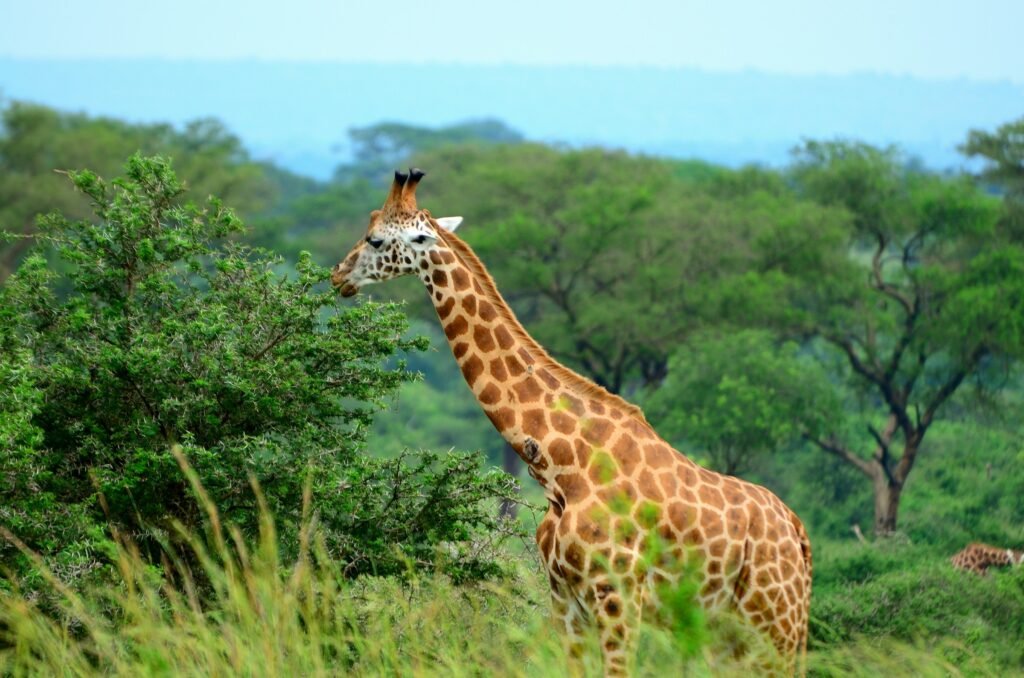
Hunting (Feeding Behavior)
Giraffes do not hunt other animals because they are herbivores. Instead, they use a feeding method called browsing, where they eat leaves from tall trees.
Feeding Behavior:
- Use their height advantage to reach food up to 6 meters high
- Prefer nutrient-rich leaves from tall trees
- Feed mostly during early morning and late evening
- Chew cud (regurgitated food) as part of digestion
Their feeding habits reduce competition with other herbivores, since few animals can reach the same height.
Conclusion:
By learning about giraffes, what they eat, and how they live, we can understand why they are important and help protect them for the future.