The Blue Crane is one of the most beautiful and unique birds found in southern Africa. Known for its graceful appearance and soft blue-gray color, this bird is also the national bird of South Africa. Despite its elegance, the Blue Crane is considered a vulnerable species and needs protection to survive in the wild.
Appearance
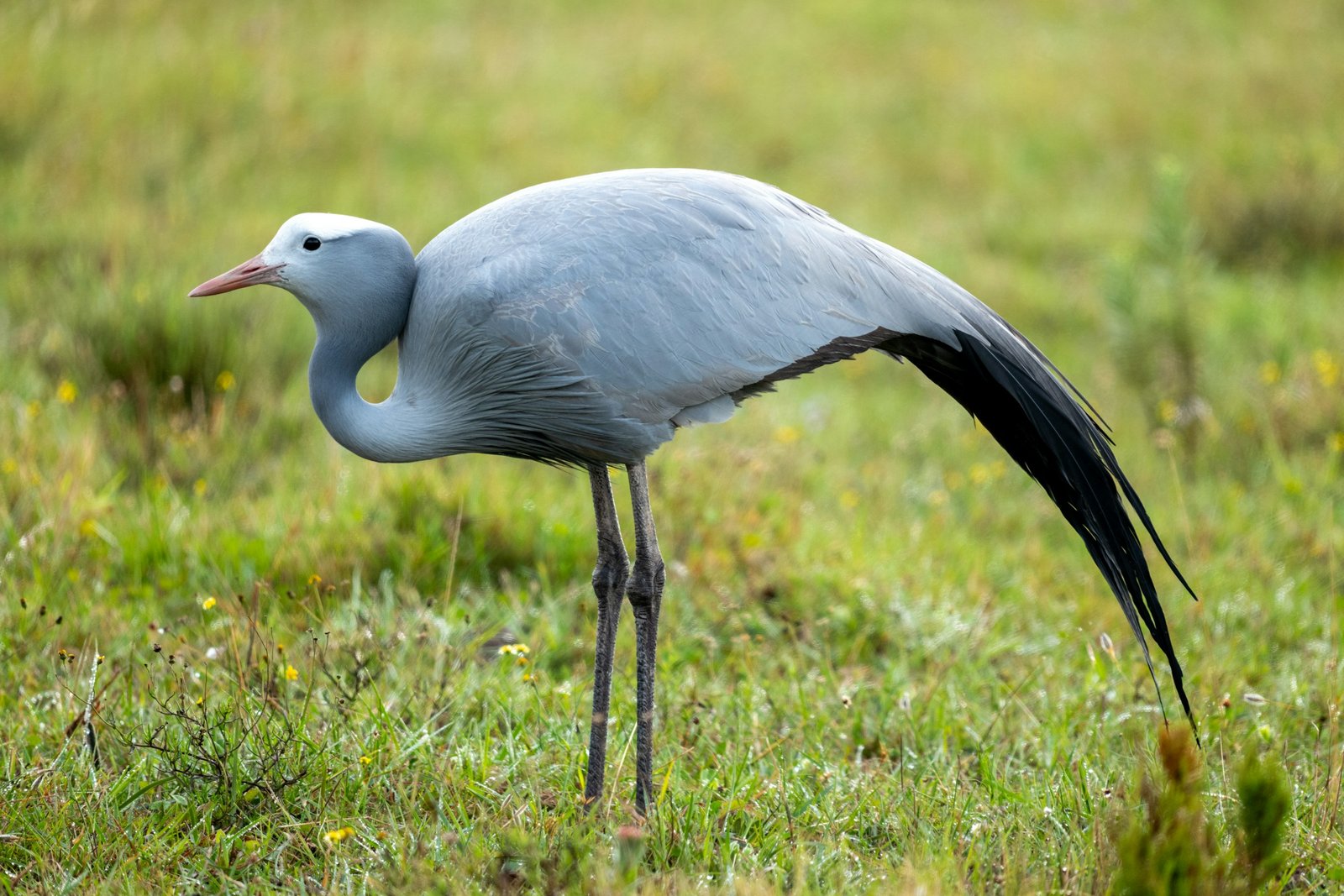
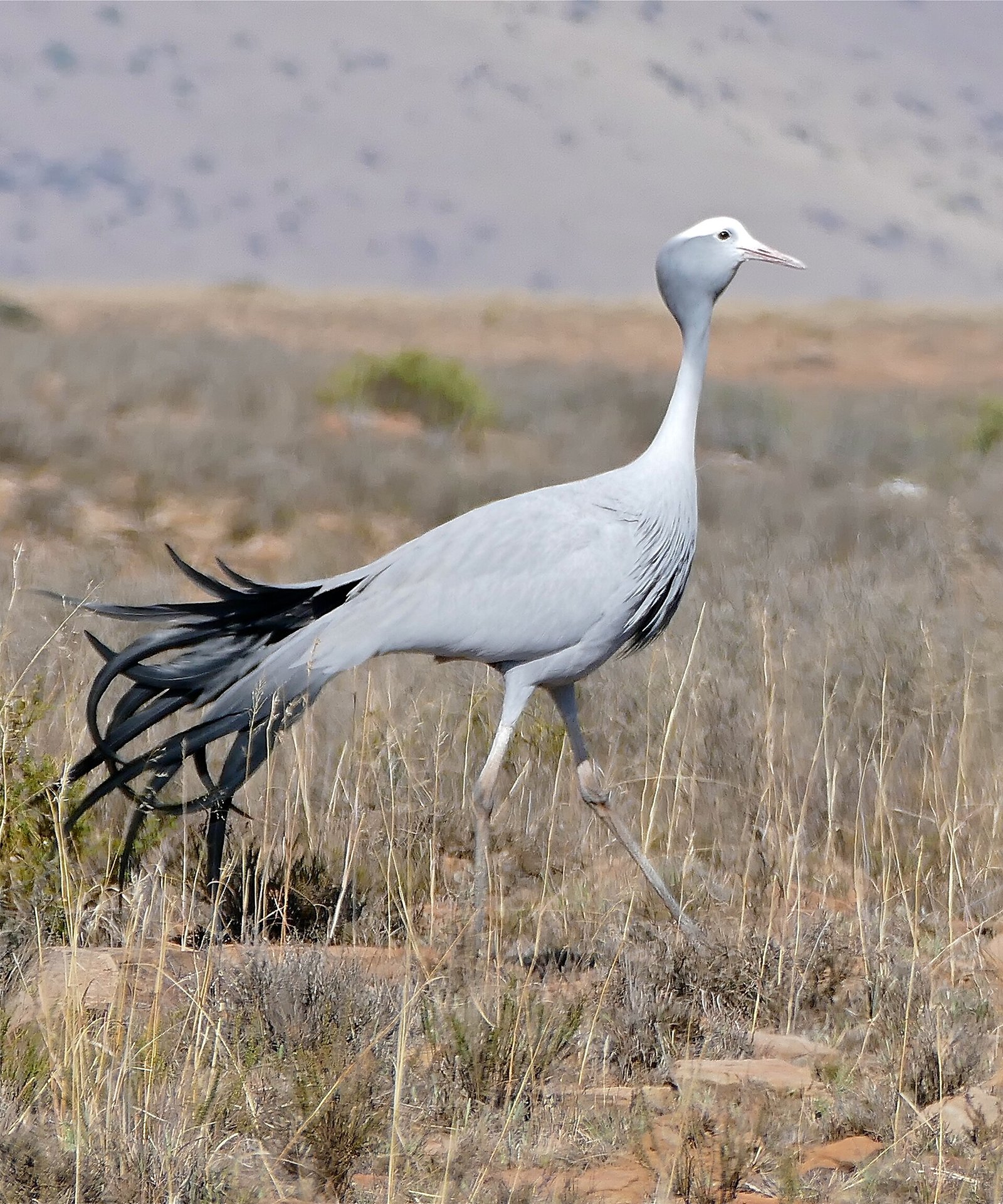
The Blue Crane is a tall, ground-dwelling bird with a slim and elegant body.
- Height: Around 1 to 1.2 meters
- Wingspan: Up to 2 meters
- Color: Pale blue-gray body
- Long, trailing wing feathers that almost touch the ground
- Thin neck and long dark legs
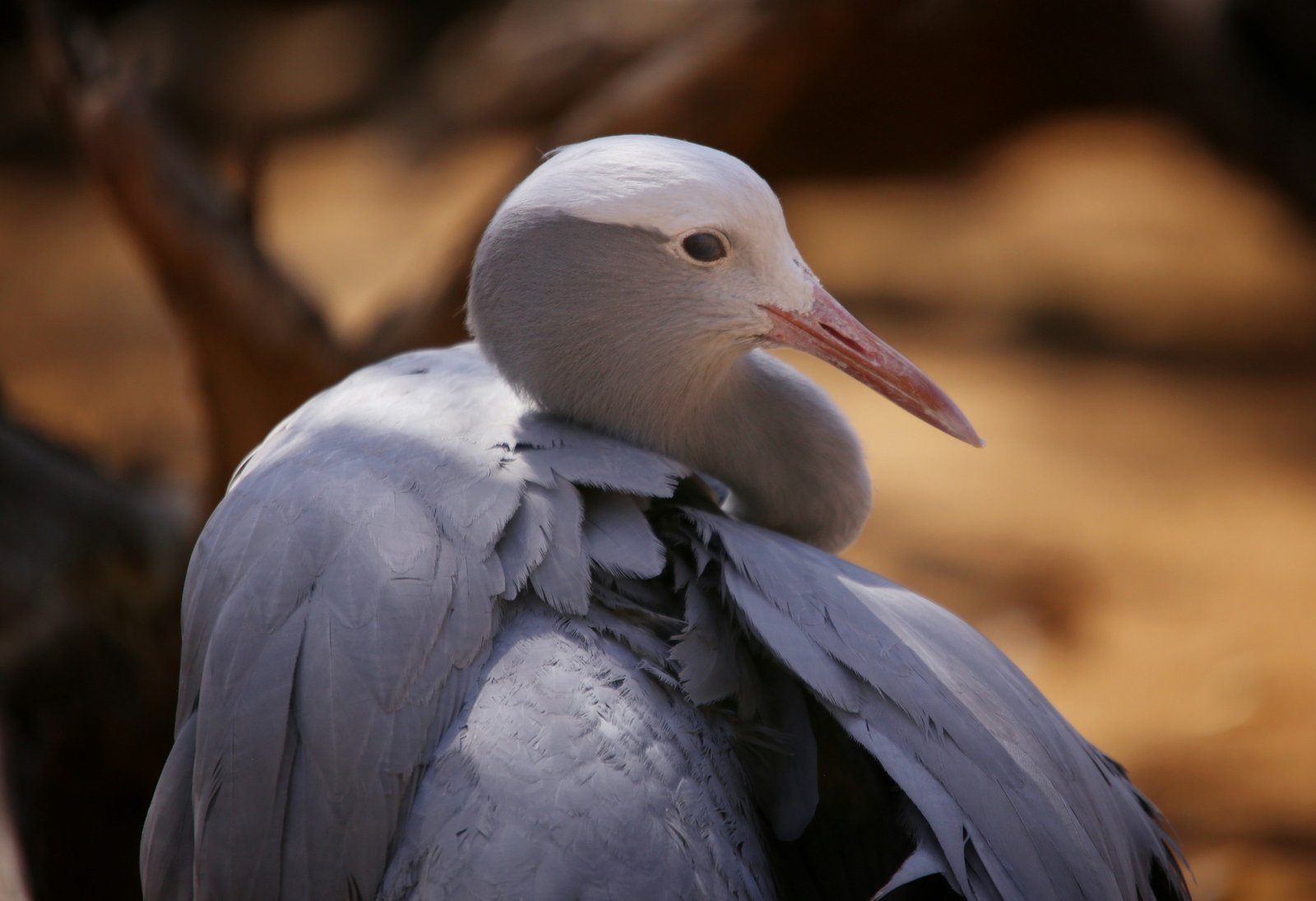
Unlike many other cranes, it does not have red patches on its head, making it unique among crane species.
Habitat and Distribution
Blue Cranes are mostly found in:
- South Africa (main population)
- Small numbers in Namibia and Eswatini
They prefer:
- Open grasslands
- Dry plains (Karoo region)
- Agricultural fields and pastures
Interestingly, about 99% of the global population lives in South Africa, making it a near-endemic species.
Diet and Feeding Habits
The Blue Crane is mostly herbivorous but also eats small animals.
Main Diet:
- Seeds and grains
- Roots and bulbs
- Insects (grasshoppers, termites)
- Small reptiles and amphibians
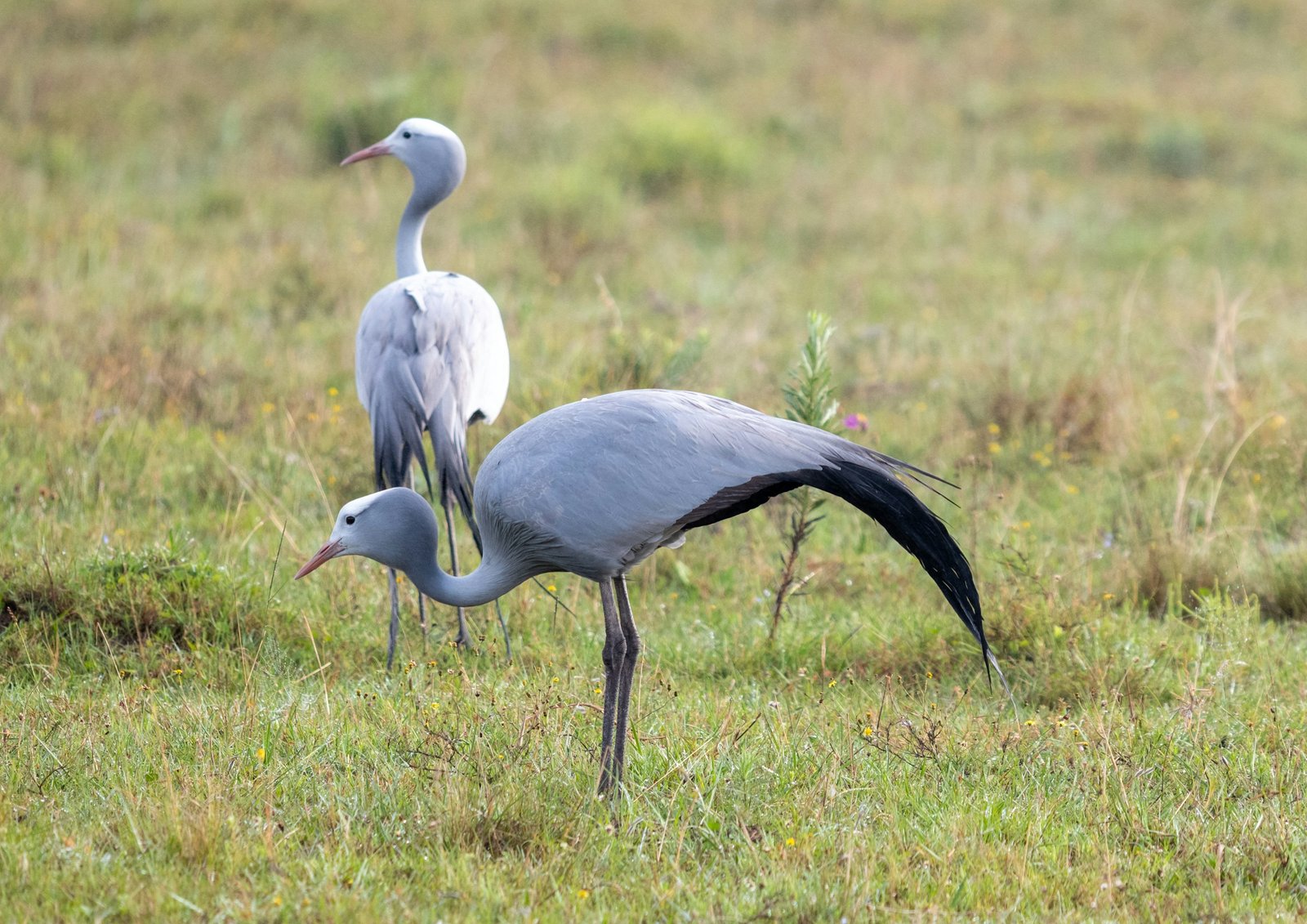
They usually feed by pecking on the ground in open fields.
Behavior and Lifestyle
- Blue Cranes are social birds, often seen in pairs or small groups
- They are monogamous, meaning they mate for life
- Known for their beautiful courtship dance, involving jumping and wing spreading
- They are generally quiet but produce a loud rattling call when communicating
Breeding and Reproduction
- Breeding season: Usually between August and April
- Nest: Simple ground nest in open areas
- Eggs: Usually 2 eggs per clutch
- Incubation: Around 30–33 days
- Both parents take care of the chicks
Young cranes learn to fly within a few months but stay with parents for up to a year.
Major Threats
- Habitat loss due to farming and development
- Collisions with power lines
- Poisoning from agricultural chemicals
- Human disturbance and illegal trade
Although conservation efforts have helped, the species still faces challenges.
Interesting Facts About Blue Crane
- It is the national bird of South Africa
- Also known as the Stanley Crane or Paradise Crane
- Has the smallest distribution range among all crane species
- Its long feathers are actually wing feathers, not tail feathers
- Can fly in a V-formation like geese
Conclusion
The Blue Crane is a symbol of beauty and grace in the wild. With its unique appearance and important role in nature, protecting this bird is essential. By understanding its habitat, behavior, and threats, we can help ensure that future generations will continue to see this elegant bird in the skies of southern Africa.