
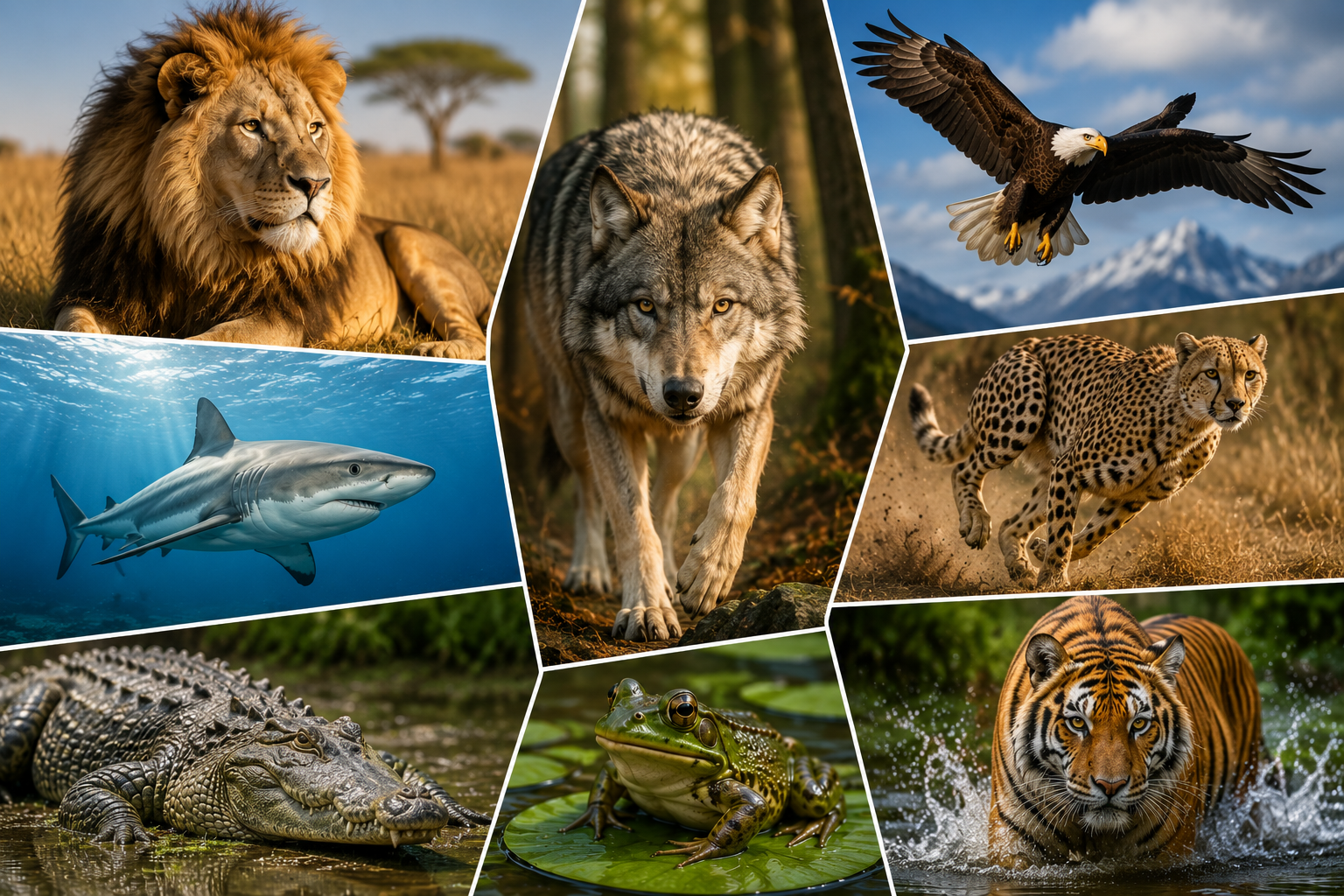
Lions are among the world’s most recognizable wild cats, known for their majestic appearance, powerful roar, and unique social lifestyle. Unlike most other cat species, lions live in organized family groups called prides, making them the only truly social big cats. Adult male lions are famous for their thick manes, which vary in color from blond to dark brown and help protect them during fights with rivals.
Lions are apex predators that play a crucial role in maintaining healthy ecosystems by controlling herbivore populations. They possess exceptional night vision, sharp retractable claws, and strong jaws capable of bringing down large prey such as zebras, buffalo, and wildebeest.
Although lions once roamed much of Europe, Asia, and Africa, today they are primarily found in sub-Saharan Africa, with a small population of Asiatic lions surviving in India’s Gir Forest. Their intelligence, teamwork, and powerful hunting abilities have made lions symbols of courage, leadership, and royalty throughout history.
Habitat
African lions inhabit a wide variety of ecosystems across sub-Saharan Africa, including open grasslands, savannas, shrublands, and lightly wooded forests. They prefer habitats that provide abundant prey, access to water, and enough vegetation for stalking animals before launching an attack.
Savannas are considered the ideal habitat because they offer large herds of grazing animals such as zebras, wildebeest, antelopes, and buffalo. Lions generally avoid dense rainforests and extremely arid deserts, although they have adapted to survive in semi-desert environments like Namibia’s Skeleton Coast.
A pride’s territory may range from 20 to more than 400 square kilometers, depending on prey availability and competition with neighboring prides. Male lions patrol these territories regularly, marking boundaries with scent markings and roaring to warn intruders.
Habitat loss caused by agriculture, expanding human settlements, and infrastructure development continues to reduce the space available for wild lions, increasing conflicts between humans and wildlife.
Behavior
Lions display one of the most complex social structures among all wild cats. They live in prides composed of related females, their cubs, and one or more dominant males. Lionesses cooperate to hunt, protect cubs, and defend territory, while males primarily guard the pride against rival males.
Lions spend up to 20 hours each day resting to conserve energy for hunting, which usually occurs during the cooler hours of dusk, night, or early morning. Their powerful roar can travel up to 8 kilometers, helping maintain pride territories and communicate with family members.
Young lions learn essential survival skills by observing adults and practicing through play. Social bonding is reinforced through grooming, rubbing heads, and resting together.
Despite their reputation as fierce predators, lions avoid unnecessary fights because injuries can threaten their survival.
Conservation Status
The African lion is currently classified as Vulnerable on the IUCN Red List. Over the past century, lion populations have declined significantly due to habitat loss, illegal hunting, human-wildlife conflict, and decreasing prey populations.
As human settlements expand, lions increasingly encounter livestock, leading to retaliatory killings by farmers. Habitat fragmentation also isolates prides, reducing genetic diversity and making populations more vulnerable.
Numerous conservation organizations are working to protect lions through habitat preservation, anti-poaching patrols, scientific monitoring, community education, and sustainable tourism initiatives.
National parks and wildlife reserves remain essential for lion conservation, providing safe habitats where prides can reproduce and thrive with minimal human disturbance.