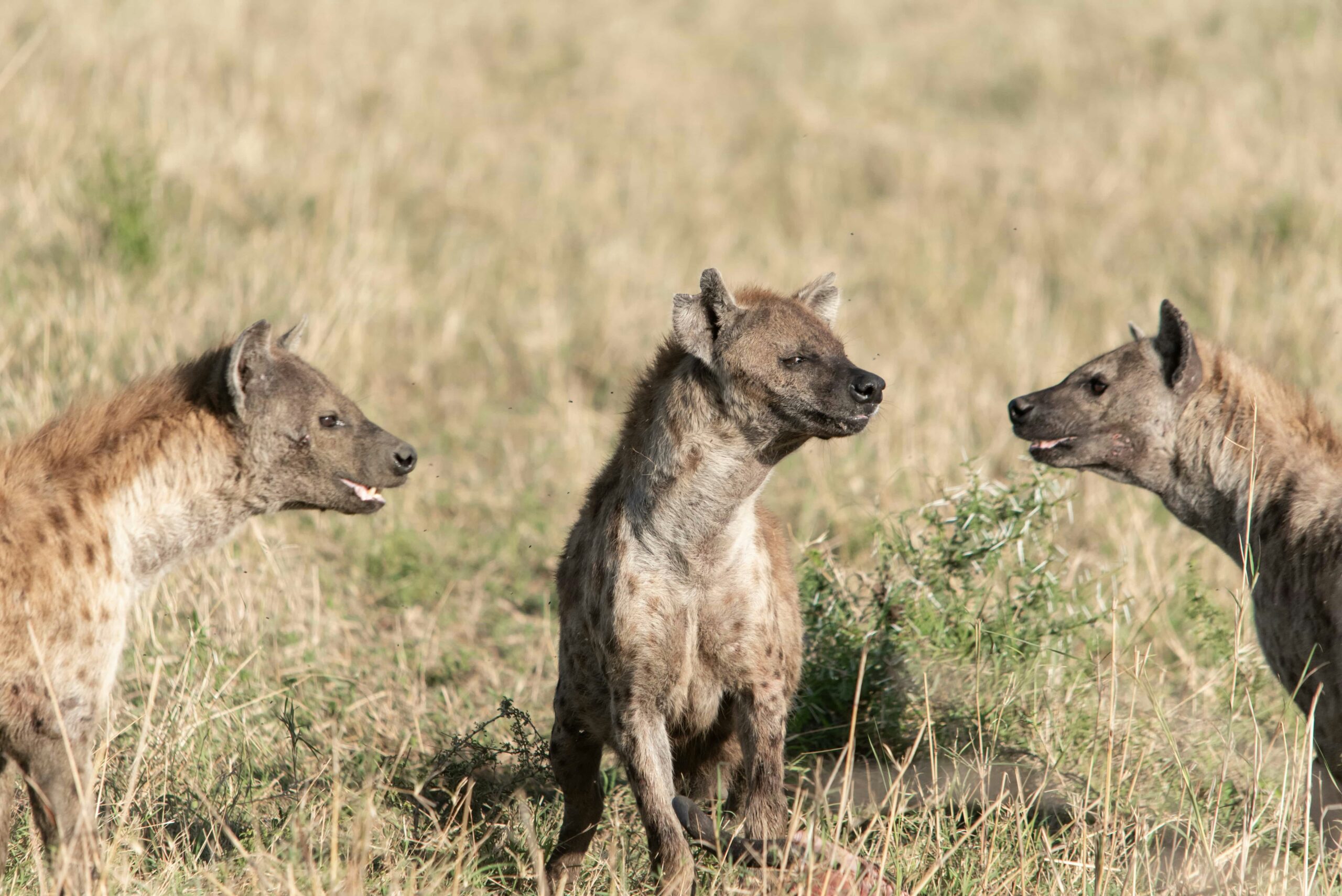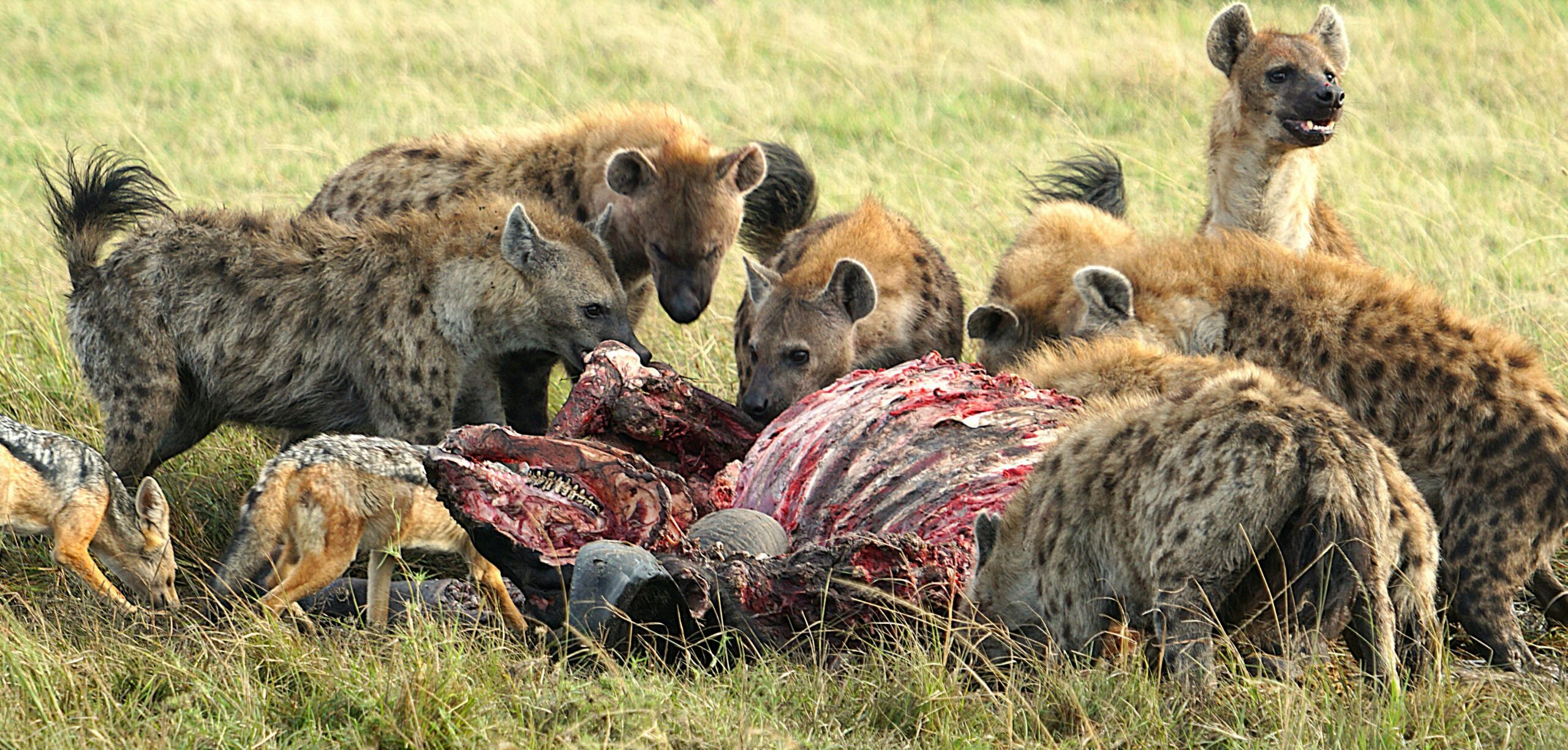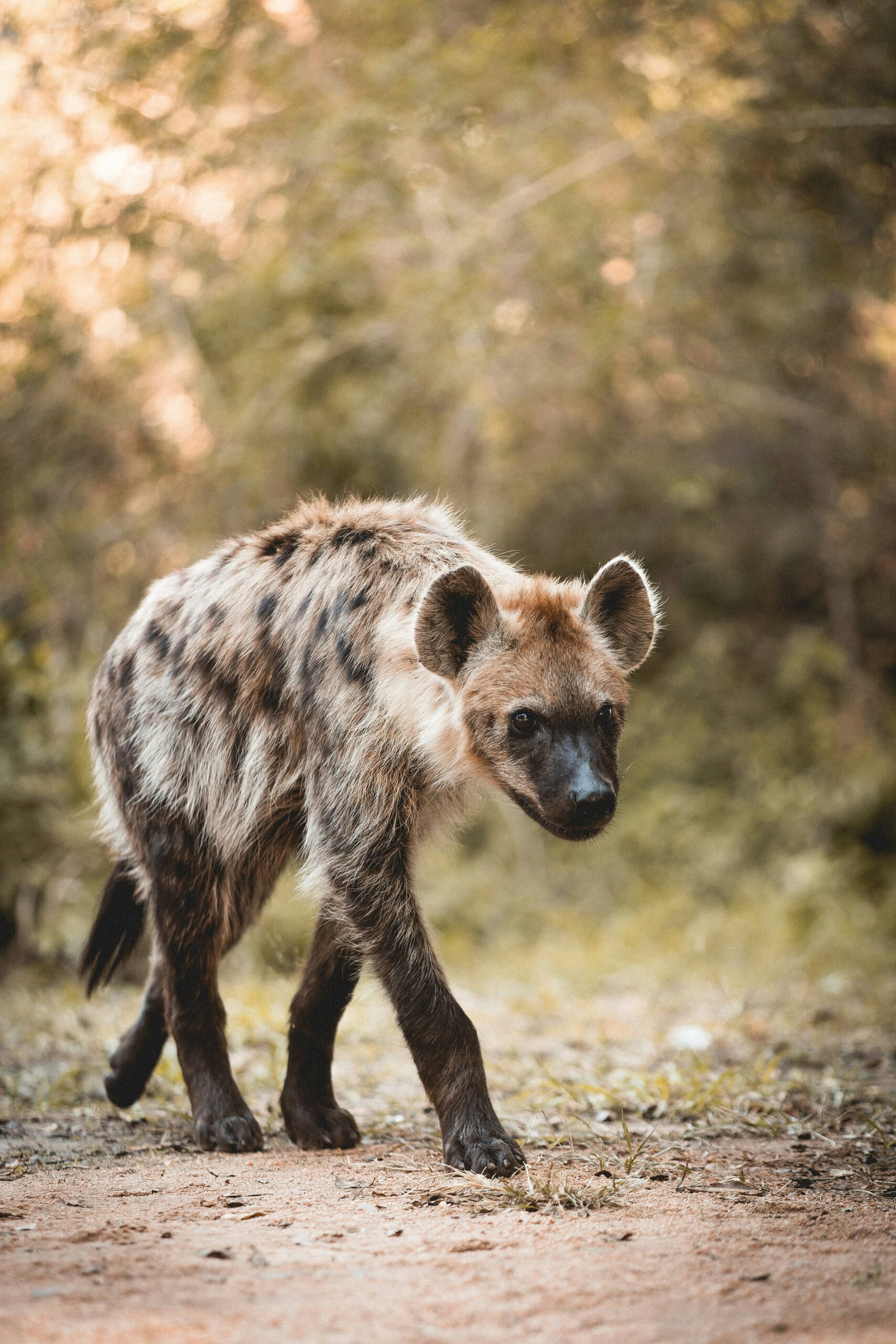
Hyenas are known for their powerful jaws, excellent hearing, strong social bonds and distinctive calls. Although they are often mistaken for dogs, hyenas belong to their own mammalian family, Hyaenidae. There are four main species of hyenas and they are:
- Striped Hyena(Hyaena hyaena)
- Spotted Hyena(Crocuta crocuta)
- Brown Hyena(Parahyaena brunnea)
- Aardwolf(Proteles cristatus)
Physical Features
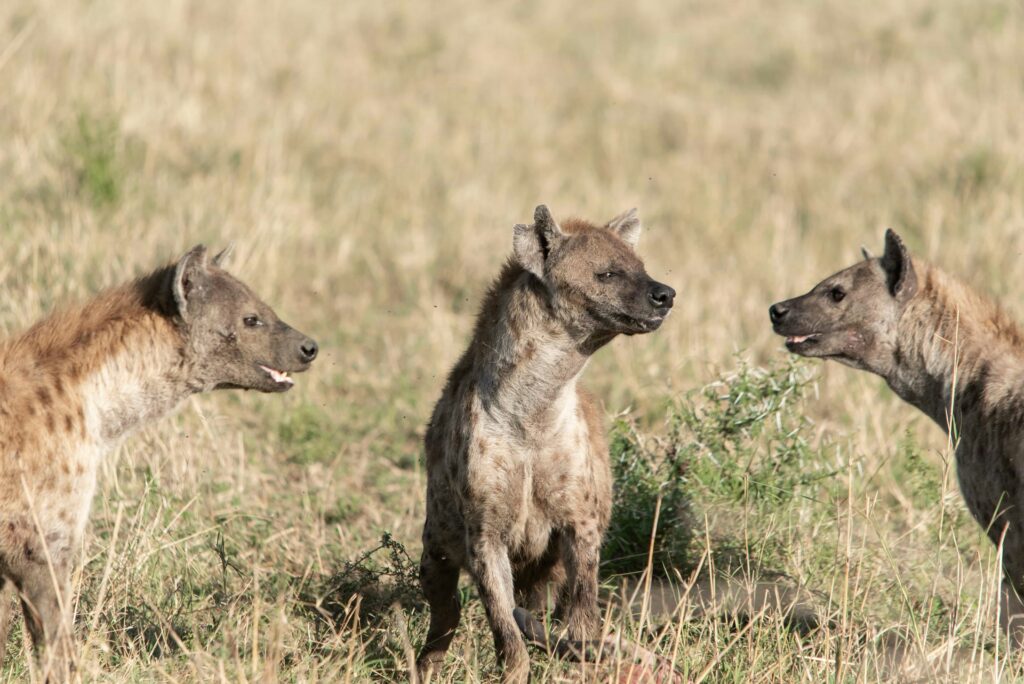
Hyenas have strong bodies, powerful jaws and front legs that are a bit longer than their hind legs, giving their backs a sloping appearance. Spotted hyenas have golden-brown coats covered with dark spots, while striped hyenas have greyish fur with dark stripes. Brown hyenas have shaggy, dark coats. Aardwolves are smaller, with pale fur and dark stripes.
Diet
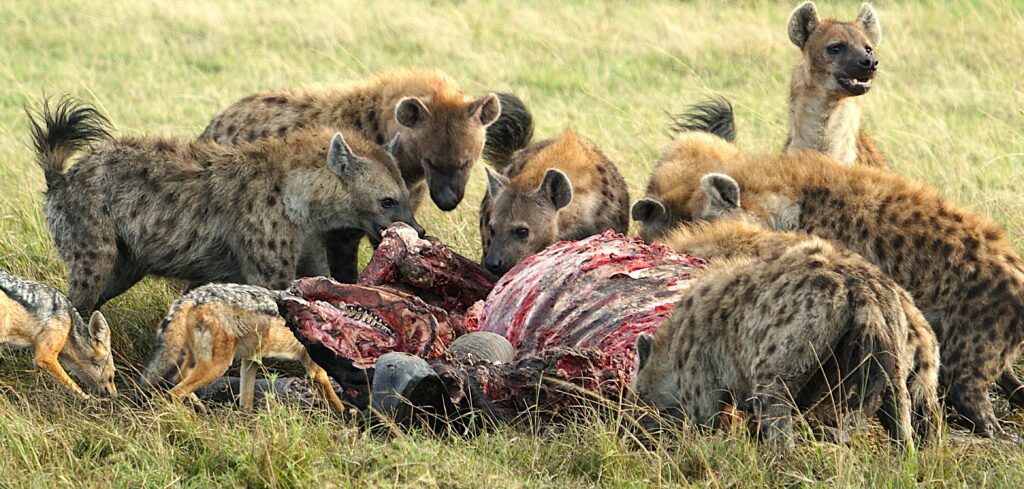
Hyenas have different diets depending on their species. Spotted hyenas hunt animals such as antelopes and wildebeest, and they also scavenge on carcasses. Striped and brown hyenas often feed on carrion, small animals and other available food. A hyenas powerful jaws allow them to crush bones and obtain nutrients that other predators may leave behind. Aardwolves are different from other hyenas as they mainly eat termites.
Behavior
Hyenas are intelligent and adaptable, they live in large social groups called clans, which can contain many individuals. They communicate through calls, body movements and scent markings. Their famous laughing-like sounds, which are called giggles, are forms of vocal communication, often associated with excitement or social interactions.
Habitat
Hyenas inhabit a variety of environments, including savannas, grasslands, woodlands, scrublands and semi-deserts. Spotted hyenas are widely distributed across parts of sub-Saharan Africa, while striped hyenas occur in parts of North and East Africa and Asia. Brown hyenas are mainly found in southern Africa. And aardwolves inhabit parts of eastern and southern Africa.
Conclusion
Hyenas are amazing animals that play an important role in nature. As both hunters and scavengers, many hyenas help regulate prey populations and remove animal remains from the environment. Despite their undeserved reputation as merely frightening scavengers, they are intelligent, resourceful and socially complex mammals.