
Introduction
The animal kingdom is full of extraordinary creatures, but few are as remarkable as the honey badger. Known for its fearless attitude, powerful claws, and incredible survival abilities, this small mammal has earned a reputation as one of the toughest animals in the wild.
Scientifically known as Mellivora capensis, the honey badger is also called the ratel. It belongs to the Mustelidae family, which includes otters, weasels, and wolverines.
Despite its relatively small size, the honey badger can hunt venomous snakes, raid beehives, dig through hard ground, and defend itself against much larger predators.
Let’s explore its physical characteristics, feeding habits, habitat, behaviour, and the fascinating adaptations that make it such a successful survivor.
Physical Appearance
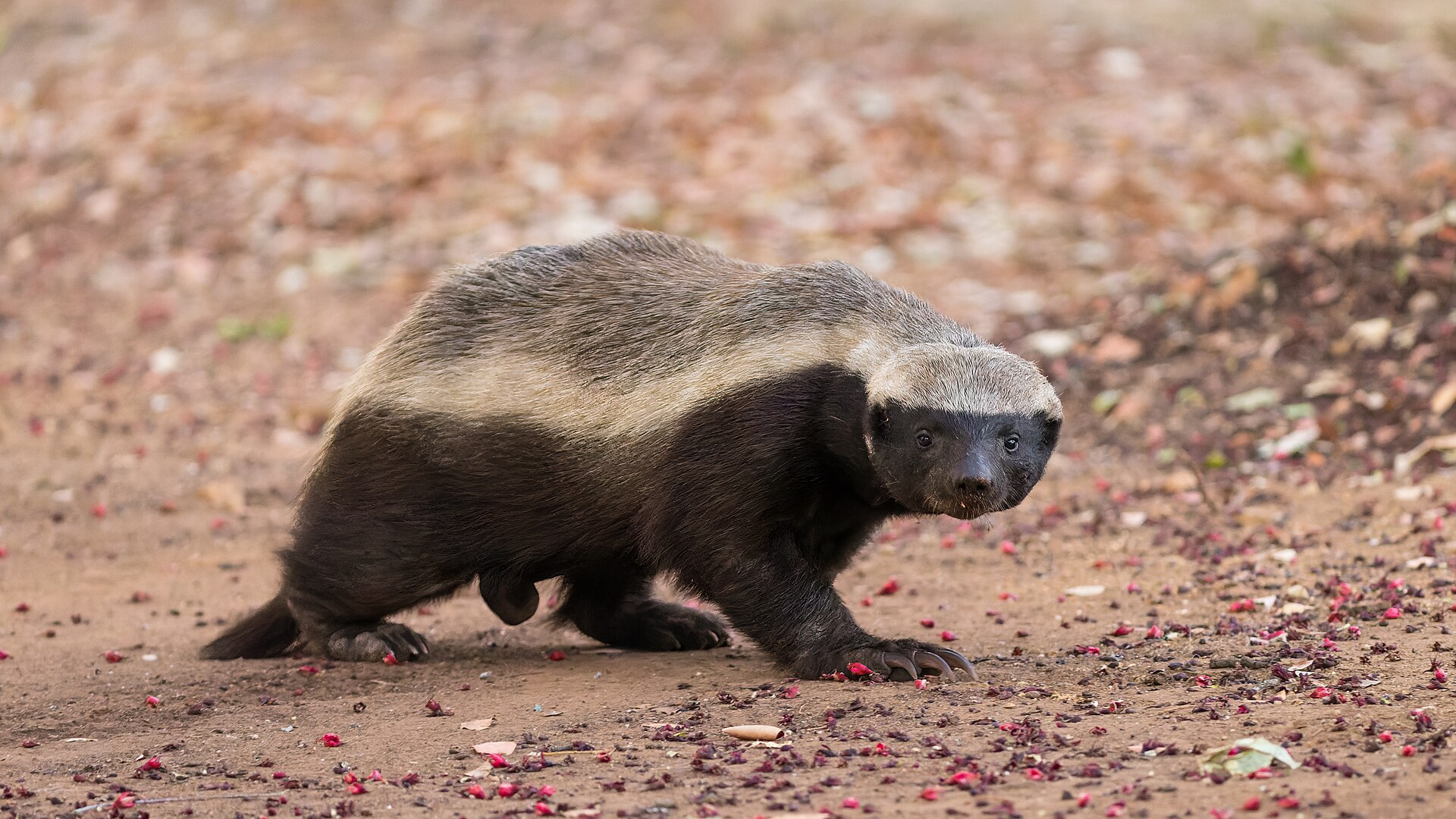
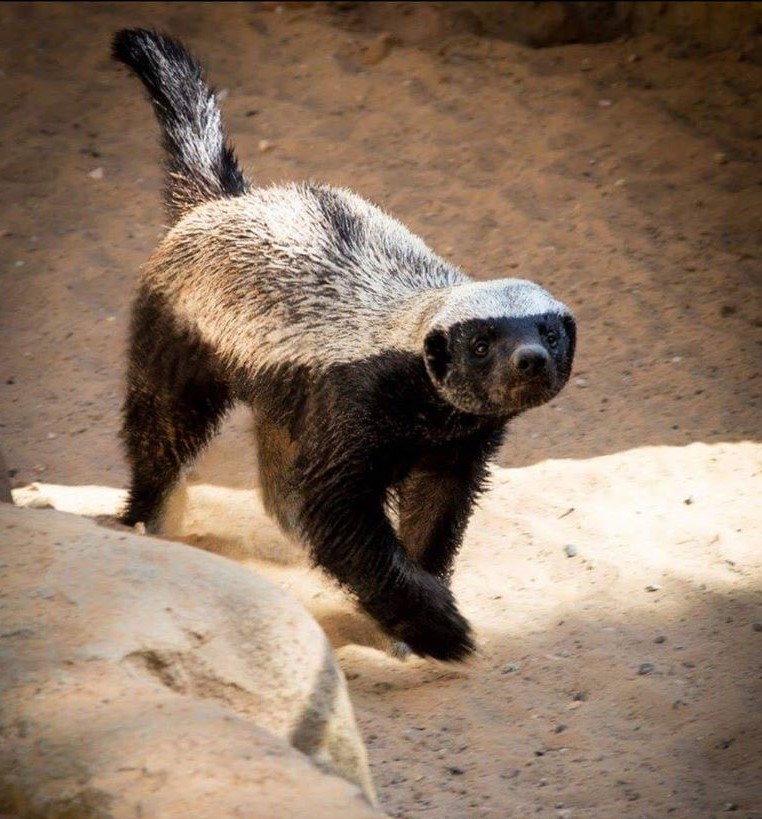
The honey badger has a distinctive appearance that makes it easy to recognise.
Its body is generally covered with coarse black fur, while a broad greyish-white stripe extends from the top of its head down its back towards the tail. This striking colour pattern creates a natural contrast between its upper and lower body.
Some of its notable physical characteristics include:
- Body: Strong, muscular, and relatively low to the ground.
- Head: Broad head with a short, powerful muzzle.
- Claws: Long, sharp, curved claws on its front feet, particularly useful for digging.
- Teeth: Strong jaws and sharp teeth for catching and eating prey.
- Skin: Exceptionally thick and loose skin that helps protect it from bites and stings.
- Tail: Short, bushy tail.
Adult honey badgers generally measure around 55–77 cm in body length, excluding the tail, although size varies between individuals and regions.
Their strong limbs and compact bodies make them excellent diggers and capable hunters.
Habitats
Honey badgers are widely distributed across Africa and parts of Asia. They are highly adaptable mammals that can survive in a variety of environmental conditions.
Their habitats include:
- Grasslands and savannas.
- Tropical and dry forests.
- Rocky hillsides.
- Semi-desert regions.
- Scrublands and open woodland.
Geographical Distribution
In Africa, they occur across many regions south of the Sahara. Their geographical range also extends into parts of the Middle East and Asia, including India.
In India, honey badgers are known from several regions, particularly areas with suitable natural vegetation and prey populations.
They generally prefer landscapes where food is accessible and suitable places for shelter are available.
Diet and Feeding Habits
Despite its name, honey is not the main component of the honey badger’s diet.
It is an opportunistic feeder with a varied diet. It consumes different animals and occasionally plant-based foods depending on availability.
Its diet includes:
- Snakes, including venomous species.
- Rodents and other small mammals.
- Lizards and other reptiles.
- Birds and eggs.
- Insects and their larvae.
- Scorpions.
- Honey and bee larvae.
- Fruits and other plant material.
Honey badgers use their powerful front claws to dig into the ground and uncover hidden prey.
They are also capable of raiding beehives to access nutritious larvae and honeycomb. Their thick skin provides some protection against bee stings.
This flexible feeding behaviour helps them survive in environments where food availability changes throughout the year.
Behaviour and Social Structure
Honey badgers are generally solitary animals. Unlike many social mammals, they usually search for food and travel independently.
They are highly territorial in some areas, although their home ranges can overlap with those of other individuals.
Some interesting behavioural characteristics include:
Solitary lifestyle: Adults usually live and hunt alone, except during mating and when mothers raise their young.
Defensive behaviour: When threatened, they may hiss, growl, turn towards an attacker, and defend themselves using their powerful jaws and claws.
Foraging behaviour: They actively investigate holes, rocks, vegetation, and underground spaces while searching for food.
Activity patterns: Honey badgers are often nocturnal, but they may also be active during daylight, depending on the region, season, and level of human disturbance.
Their bold defensive behaviour has made them famous, but avoiding unnecessary confrontations is also an important part of their survival strategy.
Special Adaptations and Survival Skills
The honey badger possesses several remarkable adaptations that help it survive in challenging environments.
Thick and Loose Skin
One of its most impressive natural defences is its thick, loose skin.
This skin makes it difficult for predators to maintain a firm grip. When an attacker grabs it, the honey badger can twist its body and attempt to bite back.
Its skin also provides some protection against bee stings and animal bites.
Resistance to Certain Snake Venoms
Honey badgers are known for hunting venomous snakes, including cobras.
Research has identified changes in their nicotinic acetylcholine receptors that reduce the effects of certain neurotoxins.
However, this does not make them completely immune to all snake venoms. A sufficiently serious bite can still be dangerous.
Powerful Digging Claws
Their long, strong front claws allow them to excavate burrows, uncover underground prey, and access insect colonies.
These claws are essential tools for both feeding and shelter construction.
Strong Jaws
The honey badger’s powerful jaws and sharp teeth help it catch, kill, and consume a wide range of prey.
Together, these adaptations make it a highly capable survivor.
Reproduction and Life Cycle
Honey badgers generally live independently, coming together primarily for mating.
Females give birth to their young in protected underground dens. These shelters provide safety during the early stages of development.
A female typically gives birth to one cub at a time.
The mother takes responsibility for feeding, protecting, and raising the cub until it becomes increasingly independent.
Young honey badgers learn essential survival skills through their mother’s care, including exploring their surroundings and locating food.
Predators and Natural Threats
Despite its reputation for toughness, the honey badger is not invincible.
Large carnivores can pose a serious threat, particularly to young or vulnerable individuals.
Its natural predators include:
- Lions.
- Leopards.
- Spotted hyenas.
- Large crocodiles in suitable habitats.
Honey badgers rely on their defensive abilities, underground shelters, and alertness to avoid dangerous encounters.
Humans also pose significant threats through habitat destruction, road accidents, hunting, and conflict with agricultural activities.
Ecological Importance
Honey badgers play an important role in maintaining ecological balance.
As predators, they help regulate populations of rodents, insects, reptiles, and other small animals.
Their digging activities can also disturb and loosen soil, potentially creating opportunities for other organisms.
By feeding on a wide variety of prey, they contribute to the natural food web.
Their presence is also part of the broader biodiversity of the ecosystems in which they live.
Conservation Status
According to the International Union for Conservation of Nature (IUCN), the honey badger is classified as Least Concern globally.
However, its populations face several local challenges.
Important threats include:
- Habitat destruction and fragmentation.
- Human-wildlife conflict.
- Illegal hunting and persecution.
- Road traffic accidents.
- Loss of natural prey.
Protecting natural habitats, promoting awareness, and reducing conflict between people and wildlife are important for the long-term survival of this species.
Interesting Facts About Honey Badgers
Here are some fascinating facts about this extraordinary mammal:
- The honey badger is also known as the ratel.
- Its scientific name is Mellivora capensis.
- It belongs to the weasel family, Mustelidae.
- It is an excellent digger with powerful front claws.
- Its diet includes venomous snakes.
- It has resistance to certain snake neurotoxins.
- Its loose skin helps protect it during predator attacks.
- It can raid beehives to feed on bee larvae and honeycomb.
- It is generally solitary.
- It occurs across Africa and parts of Asia, including India.
Conclusion
The honey badger is a remarkable example of how animals develop extraordinary adaptations to survive in the wild.
From its thick protective skin and powerful claws to its ability to hunt venomous snakes, almost every aspect of its biology contributes to its survival.
Although its fearless reputation often attracts attention, the honey badger is much more than an aggressive animal. It is an adaptable predator that plays a valuable role in its natural ecosystem.
Its strength, intelligence, and survival strategies make it one of the most fascinating mammals in the animal kingdom.