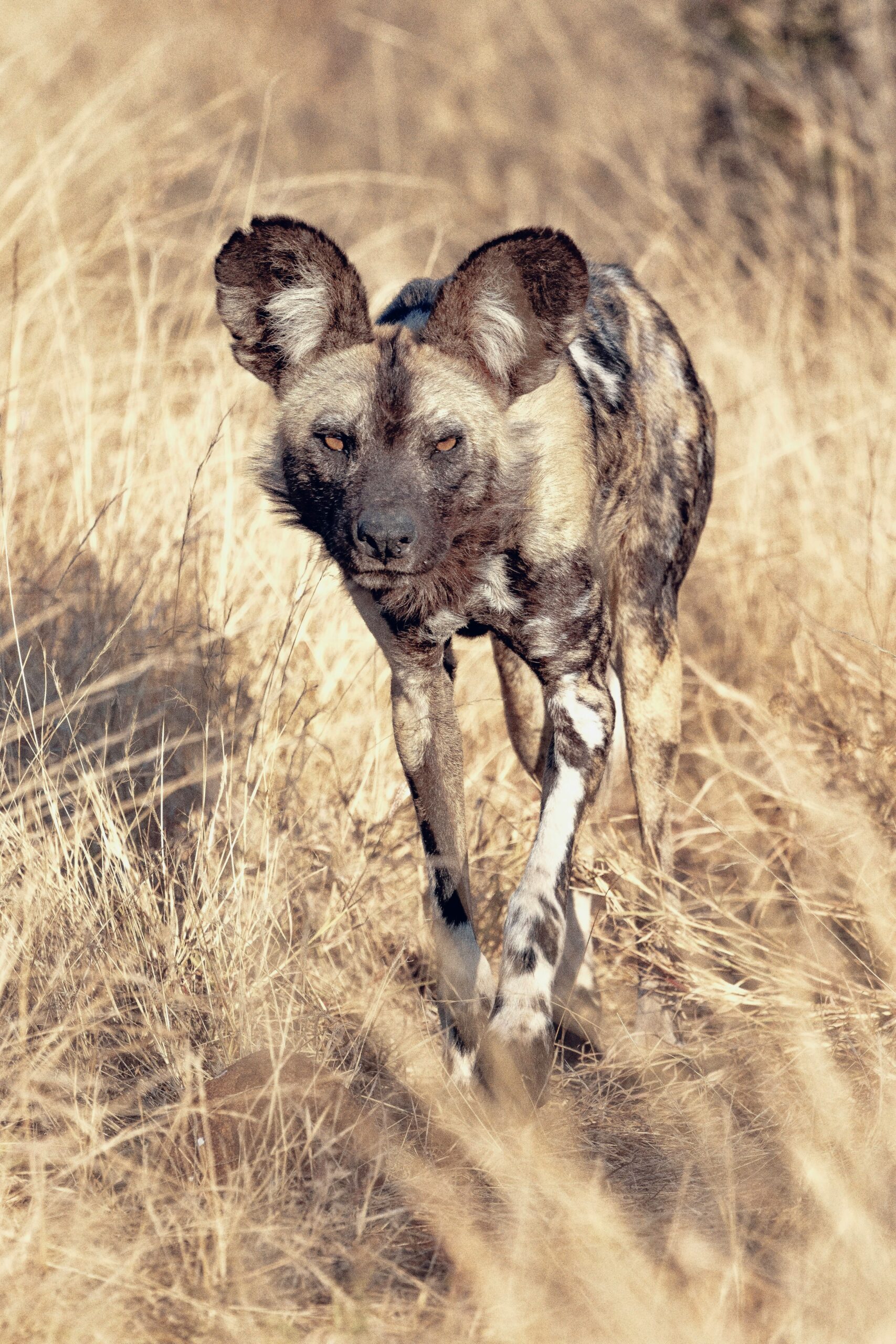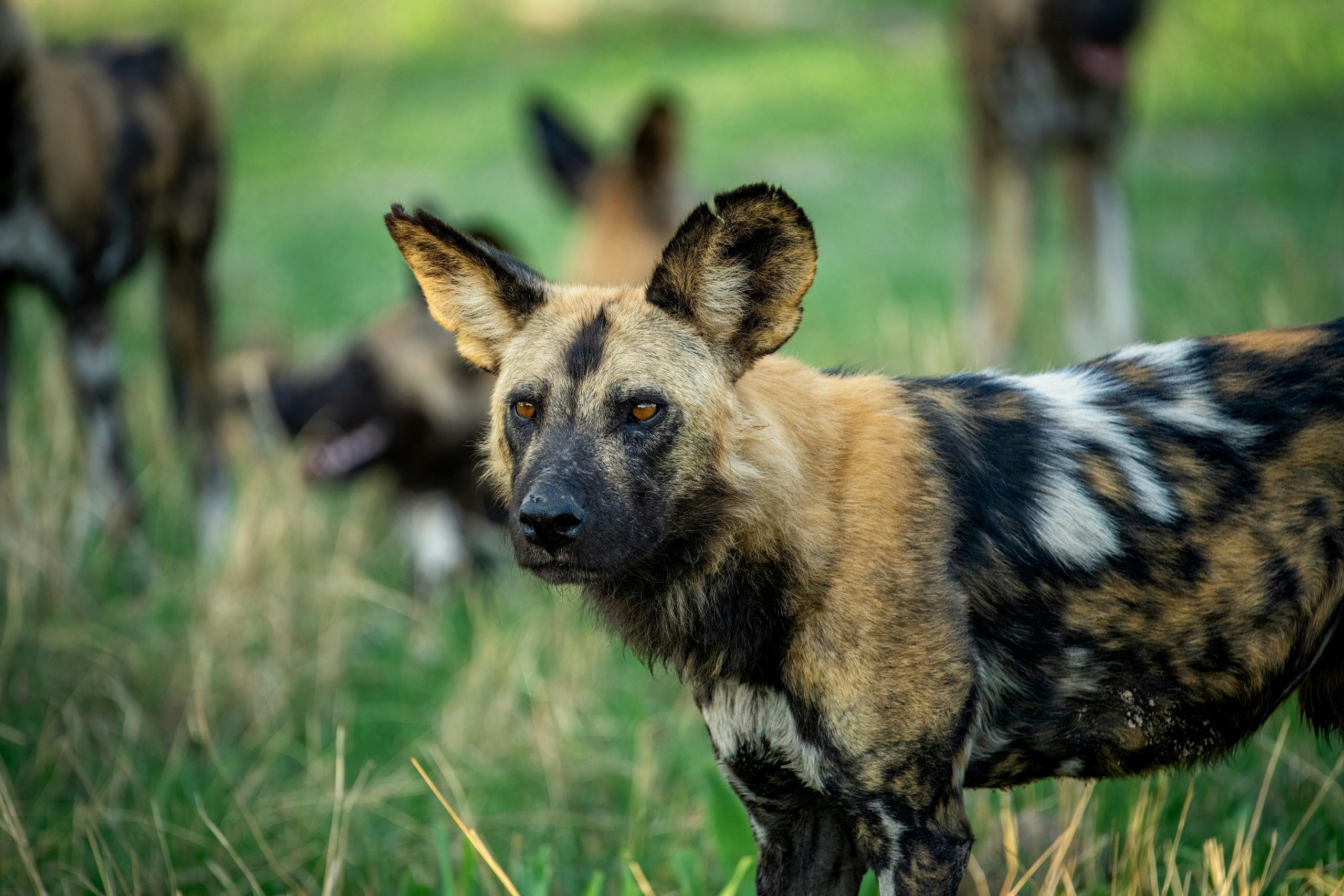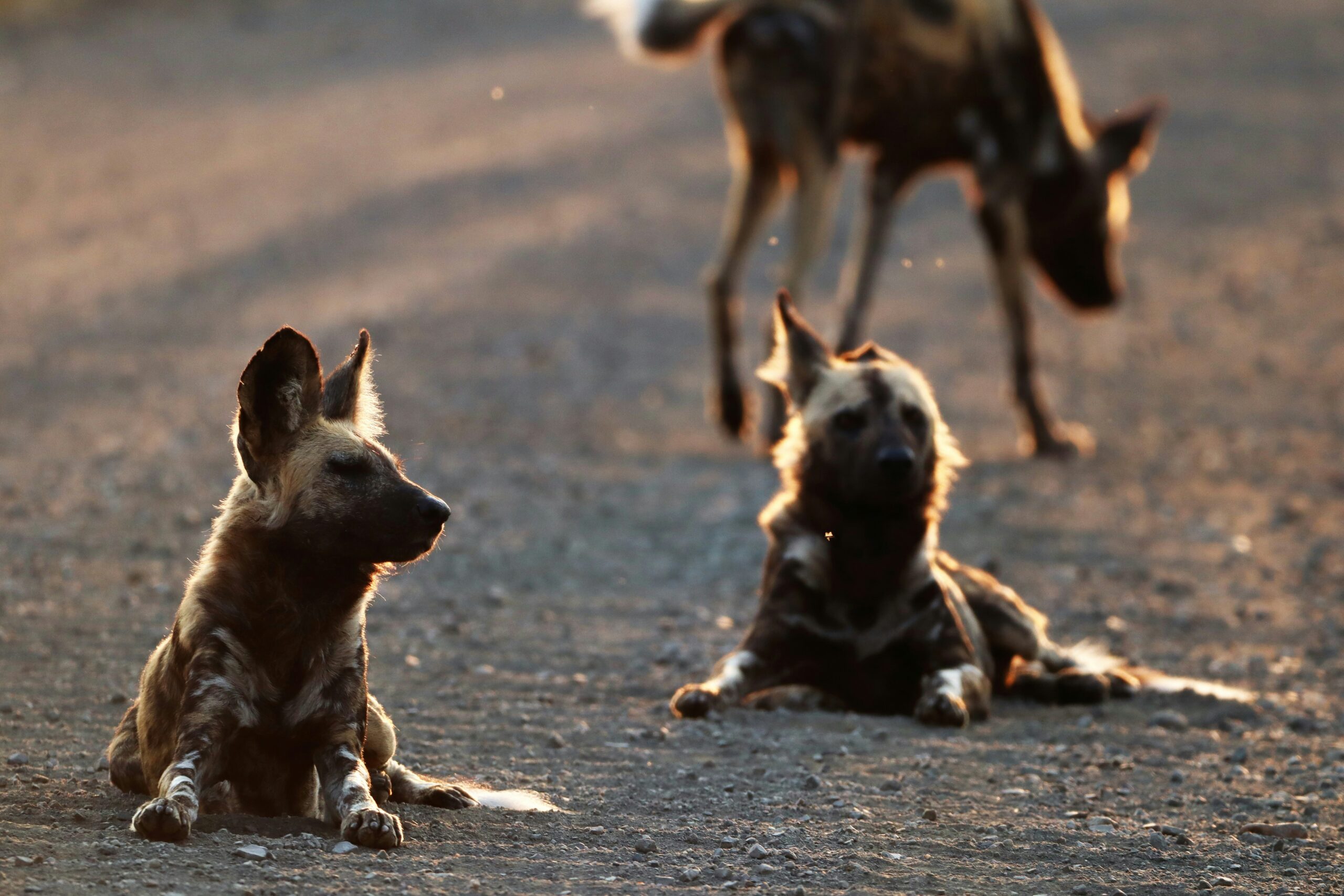
African wild dogs, also known as painted dogs, are found mainly in sub-Saharan Africa and are famous for their colorful coats, teamwork, and excellent hunting skills. Their scientific name is Lycaon pictus (which means “painted wolf”).
Diet
African wild dogs are carnivores, which means they eat meat. They are skilled pack hunters that chase their prey over long distances until they become exhausted. Their diet mainly consists of:
- Antelopes: Such as impalas and gazelles, which are among their favourite prey.
- Young wildebeest: They may hunt young wildebeest when the opportunity arises.
- Other small animals: Hares and other small mammals.
- Larger prey: They sometimes hunt larger antelopes by working together as a pack.
Physical Appearence
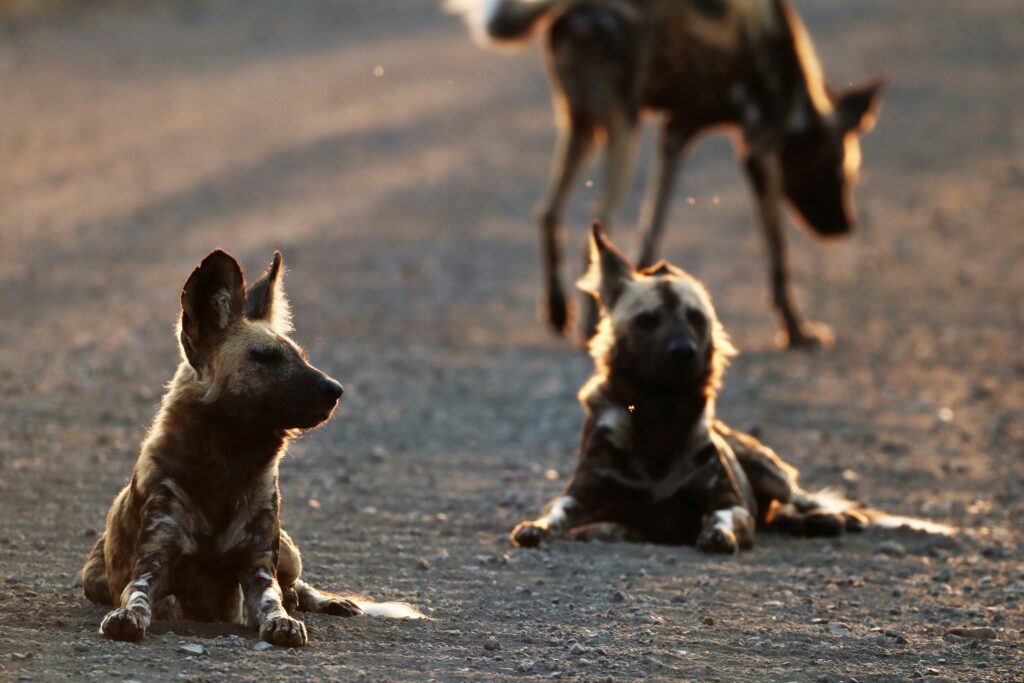
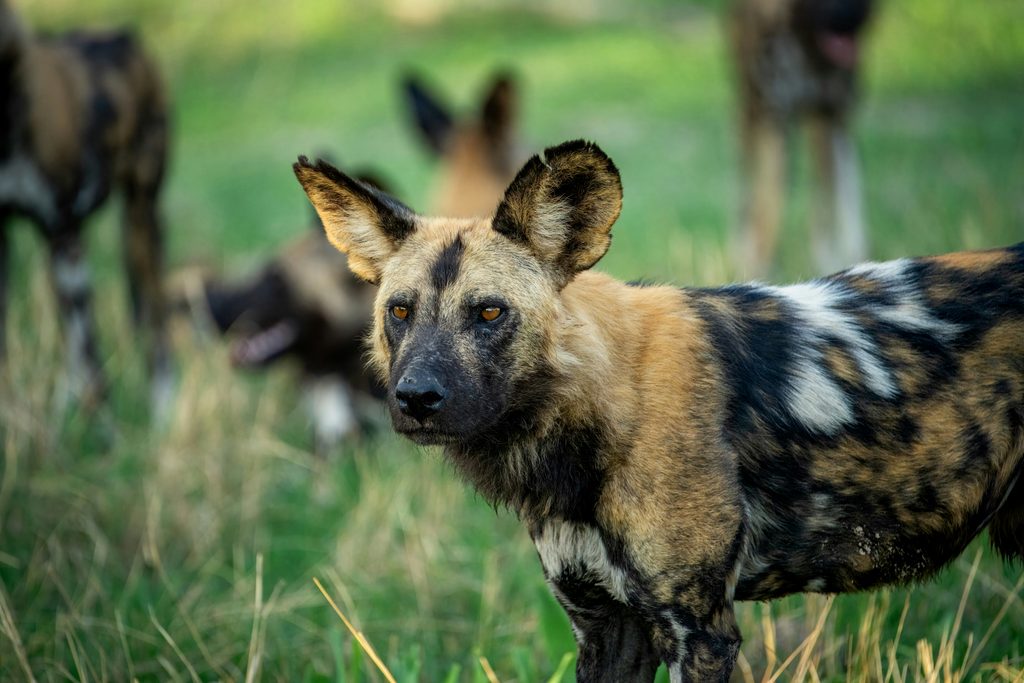
Their fur has irregular patches of black, brown, yellow, white and sometimes reddish colours. Each dog has a unique coat pattern. They have large, rounded ears that help them hear noises and communicate with other pack members. They have slender, muscular bodies and long legs, which help them run fast over long distances. Their faces usually have a dark muzzle. They have bushy tails, often with a white tip that can help pack members see one another in tall grass.
Behavior
African wild dogs are highly social animals known for their teamwork and communication. They show strong family bonds as they live in packs. The pack members cooperate during hunts, using their speed and stamina to catch their prey. Adults help protect pups, and pack members who go out to hunt may bring food back for those that remain at the den. In conclusion, African wild dogs are intelligent, cooperative and social animals. They use their strong teamwork and family relationships which are essential to their survival in the African wilderness.
Habitat
They are found in parts of southern and eastern Africa, including Botswana, Zimbabwe, Tanzania and Zambia. African wild dogs prefer large areas of land where they can travel freely and hunt their prey.
- Grasslands and savannas: These open landscapes provide space for African wild dogs to chase prey and hunt cooperatively.
- Woodlands and scrublands: These areas offer shelter, shade and places to rest.
Conclusion
African wild dogs are fascinating and intelligent animals known for their unique appearance, strong family bonds and remarkable teamwork. Their high speed cooperative hunting style and colorful coat truly make them special.