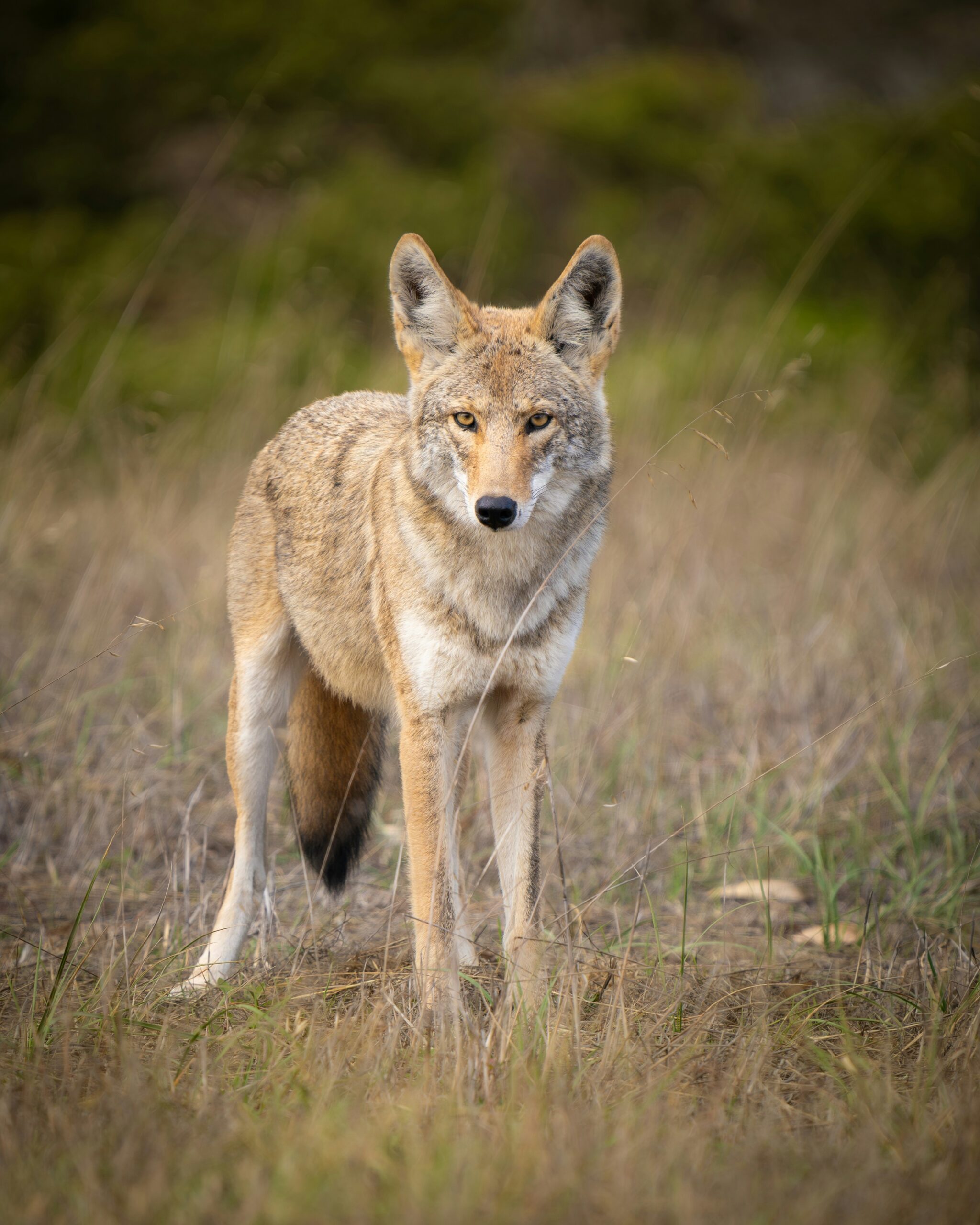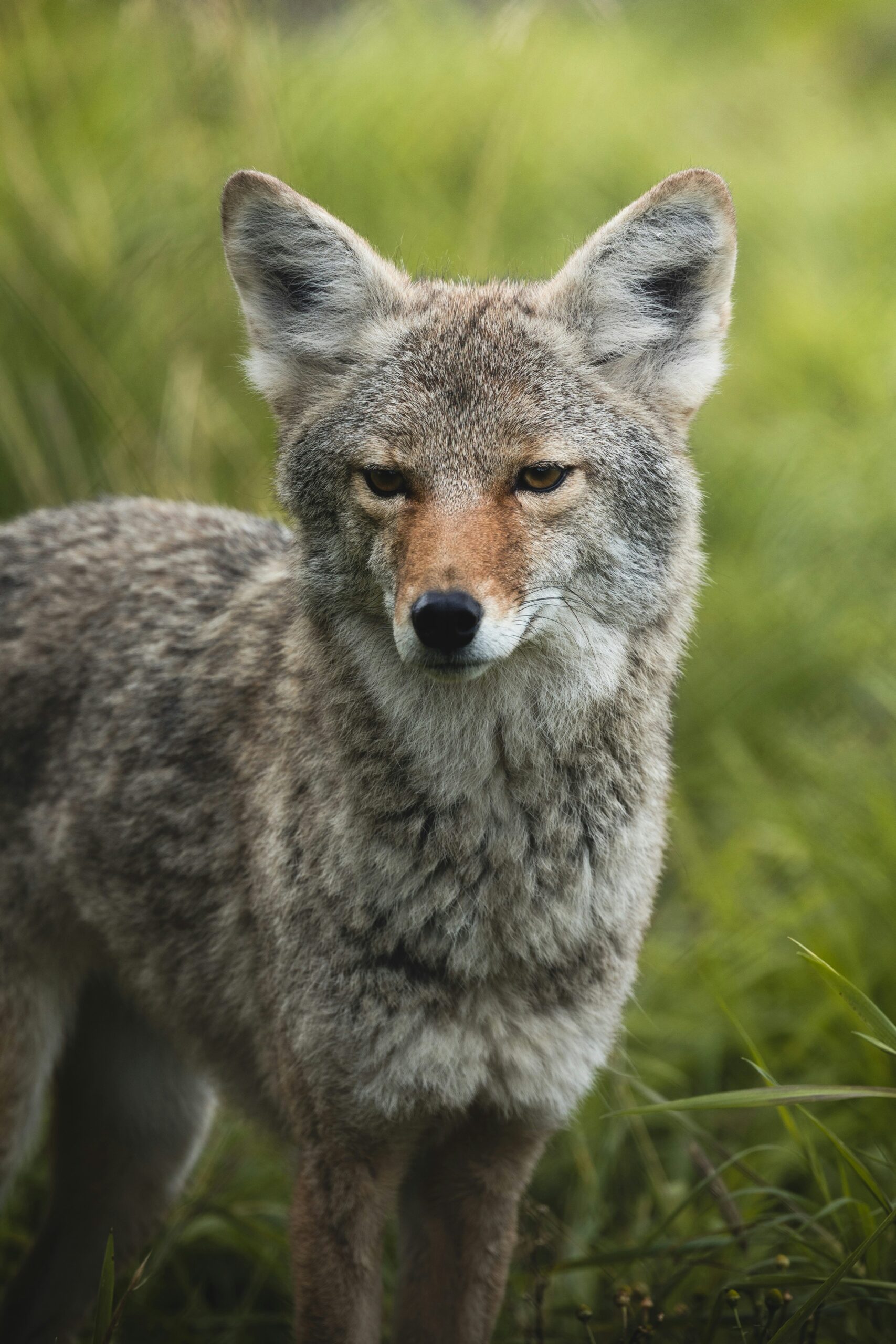
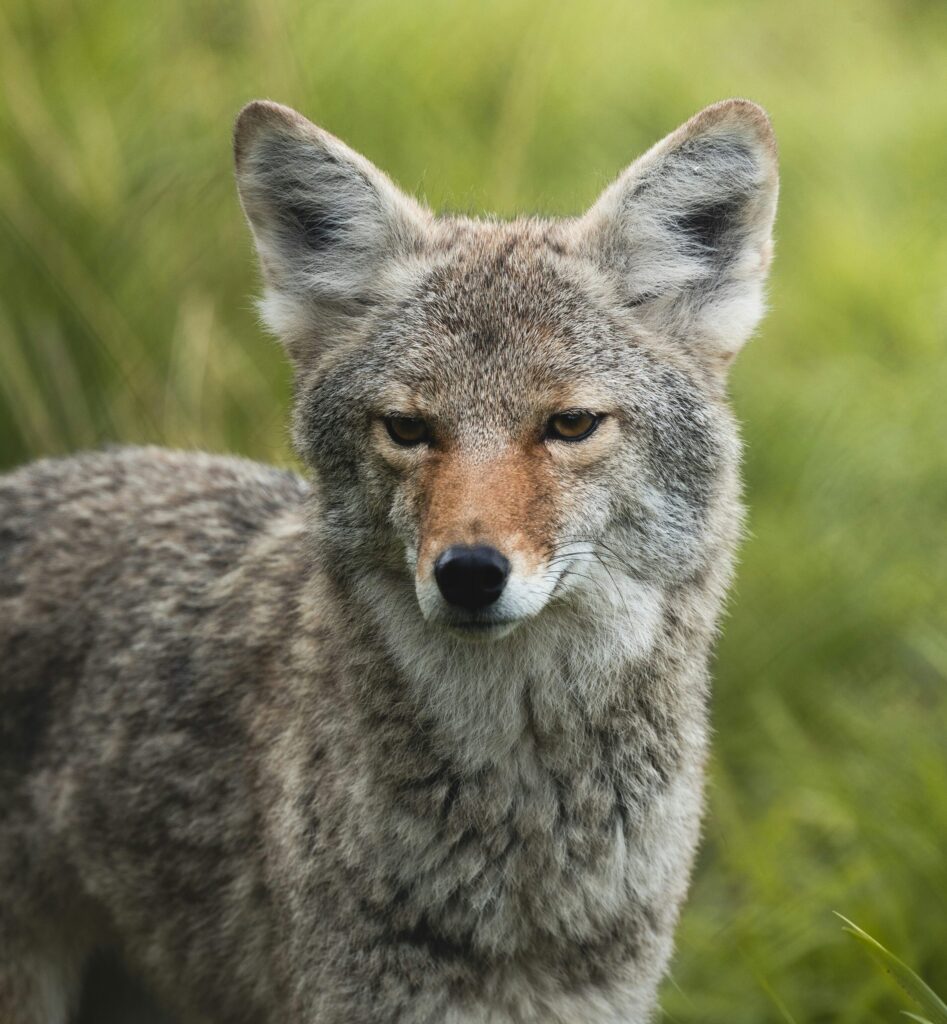
The coyote (Canis latrans) also known as American jackal, Prairie wolf, and Brush wolf is an canine native to North America. though not the same species it is closely related to the gray wolf. It is medium sized and highly adaptable being able to live in urban settlements.
Diet
Coyotes are omnivorous animals meaning they eat both ants and animals. Most of a coyotes diet consists of meat supplemented with fruits, berries and grasses. the animals mostly eaten by coyotes are:
- rabbits
- rodents
- deer
- birds
- insects
- snakes, frogs, lizards and invertibrae
Coyotes have adapted to living in urban and suburban areas by scavenging and stealing food from garbage bins and cmposts.
Habitat
Coyotes inhabit diverse natural and human-altered environments throughout North and Central America, with their range extending from Alaska to Panama.
- Grasslands and Prairies: These are traditional coyote habitats, where open landscapes provide ideal conditions for hunting rodents and other small animals.
- Deserts and Scrublands: Coyotes thrive in dry environments, including arid regions such as the Sonoran Desert.
- Forests: They inhabit both coniferous forests, dominated by cone-bearing trees, and deciduous forests, where trees shed their leaves seasonally.
- Mountains and Foothills: Coyotes can be found in mountainous regions and nearby foothills, where they travel and hunt across varied elevations.
Behavior
1.Social behavior
- Coyotes are often seen alone, in pairs, or in small family groups.
- They do not usually form large, permanent packs like wolves.
- Family groups may cooperate in raising young and defending their territory.
- Their social structure depends on food availability, habitat, and the time of year.
2. Communication
- Coyotes communicate using howls, barks, yips, whines, and growls.
- Howling helps them communicate over long distances and may help family members locate one another.
- They also use body language, facial expressions, and scent marking to communicate.
- Several coyotes calling together can sound like a much larger group than is actually present.
3. Hunting behaviour
- When prey is larger or difficult to catch, coyotes may sometimes cooperate with others..
- Coyotes are opportunistic hunters, meaning they adjust their hunting methods according to the prey available.
- They often hunt small animals, such as rodents and rabbits, alone.They use their keen hearing, smell, and eyesight to locate prey.
- They may stalk prey quietly before chasing or pouncing on it.
Conclusion
Coyotes are intelligent and adaptable animals that can survive in many different environments. Their varied diet, hunting skills, and communication methods help them thrive in the wild. They also play an important role in maintaining the balance of their ecosystems.