Introduction
Leopard can survive in deserts, but only certain subspecies have adapted to these harsh environments. Thanks to their incredible flexibility, leopards are found in habitats ranging from rainforests to dry, rocky deserts.
Leopard in Desert Environments
Which Leopards Live in Deserts?
Some leopard subspecies are specially adapted to dry regions:
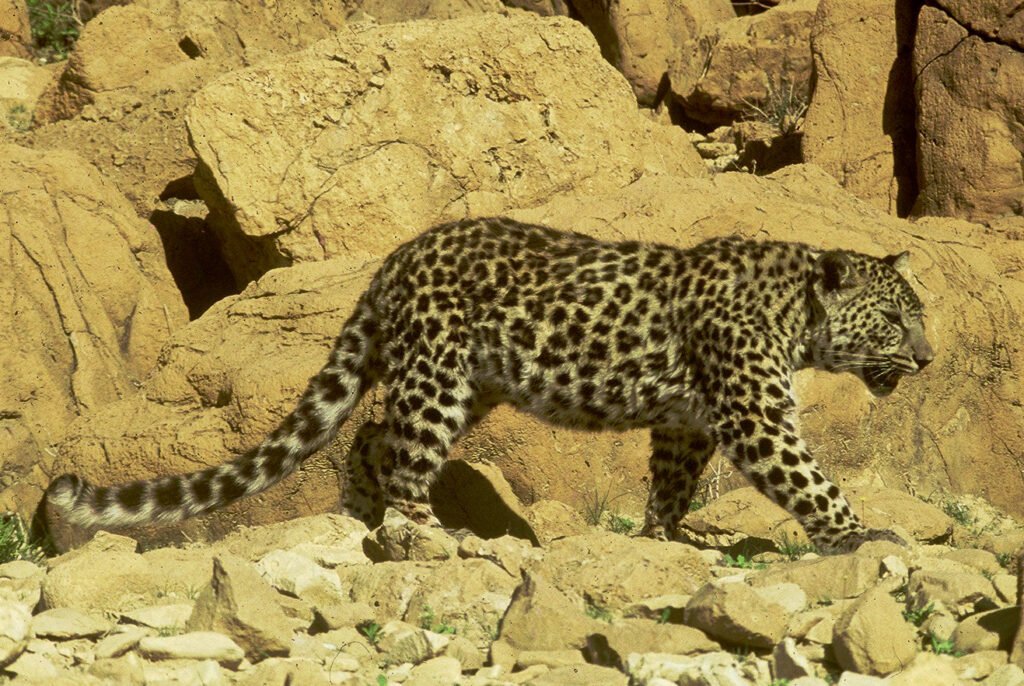
- Arabian leopard – Found in the deserts of the Middle East
- Persian leopard – Lives in mountainous and semi-desert regions
These leopards prefer rocky hills, cliffs, and sparse vegetation rather than open sandy dunes.
How Do Leopards Survive the Heat?
Deserts are extreme, but leopards use smart survival strategies:
- Nocturnal lifestyle – Hunt at night to avoid daytime heat
- Water efficiency – Get most moisture from prey instead of drinking often
- Shade seeking – Rest in caves, rocks, or bushes during the day
- Large territories – Travel long distances to find food and water
Diets (What Do Desert Leopards Eat?)
Food is scarce in deserts, so leopards adapt their diet:
- Wild goats and ibex
- Small mammals like rodents and hares
- Birds and reptiles
- Livestock (Occasionally leopards hunt and eat farm animals, which causes problems with humans).
Learn more about leopard diet here.
Challenges in Desert Survival
Desert life is tough for leopards due to:
- Limited prey availability
- Extreme temperatures
- Human encroachment and hunting
- Habitat loss
The Arabian leopard is now critically endangered, with very few individuals left in the wild.
Final Thoughts
Leopards are among the most adaptable big cats on Earth. While deserts are not their primary habitat, certain subspecies have evolved to survive in these harsh landscapes using intelligence, stealth, and flexibility.